Due to the COVID-19
pandemic, declared by WHO on March 11, 2020, almost all the services scheduled
by our clients were suspended. At this time, not much information was available
about its impact and the progression of the virus in Brazilian territory, and
as a result, safety policies were not yet mature.
Initially,
we provided and encouraged the use of masks and private drivers due to the lack
of intercity transportation. We also provided authorizations to cross sanitary
barriers on the roads and opened a direct dialogue with employees in order to
provide what was needed to reduce the sensation of insecurity.
After the
first two weeks of uncertainties and low level of service activity, business
started to move again, as oil production could not stop.
Unfortunately,
the pandemic intensified. Cases of Covid-19 were identified on board platforms
and vessels in Brazil and the need for offshore companies to change their daily
routines was evident.
The impacts on work policies
Despite the
guidelines to prevent the progression of coronavirus in offshore activities announced
by the ANP and governmental agencies, there is no common policy adopted by oil
companies against Covid-19. Each oil company is implementing its own guidelines
to protect workers’ health and continue oil and gas production.
Initially,
our customers, with the most conservative approach, implemented a one-week quarantine
in a hotel room before allowing anybody to go offshore. This was adopted in the
hope that any symptoms of the disease would appear before going offshore, in the
case that a person had been contaminated. Later on, other companies applied
less effective actions, such as checking body temperature before going offshore
or requesting medical documentation.
As an
offshore service provider, we realized the need to adopt preventive procedures in
order to guarantee employees’ rights and to carry out safe operations. Due to
the seriousness of the pandemic, working with maximum safety procedures are
important to ensure the health of employees and the continuation of offshore
operations.
In addition
to carrying out health checkups, our offshore service technicians are required to
be in isolation before going offshore. If someone shows symptoms of
contamination and/or has had contact with a person, who is contaminated, our
security policy does not allow this technician to provide any services offshore.
As a result
of this safety policy, we have not yet registered any positive case of Covid-19,
and we have only encountered one situation that caused greater concern.
The
incident was with an employee, who had boarded the same flight as a person that
were showing symptoms of the virus during the period offshore. Our client’s
immediate response was to isolate this person and everyone, who had had any
contact with him. We subsequently established contact with the client’s medical
team to collect all information and consulted our own occupational physician.
Our service
technician arrived ashore and was examined by a medical team and tested for
Covid-19. To avoid the possibility of contaminating the employee’s family, we
provided him with a hotel room until the test results was ready. Almost seven
days later, the result of the test was ready and fortunately it was negative,
which meant that our technician could go home safely.
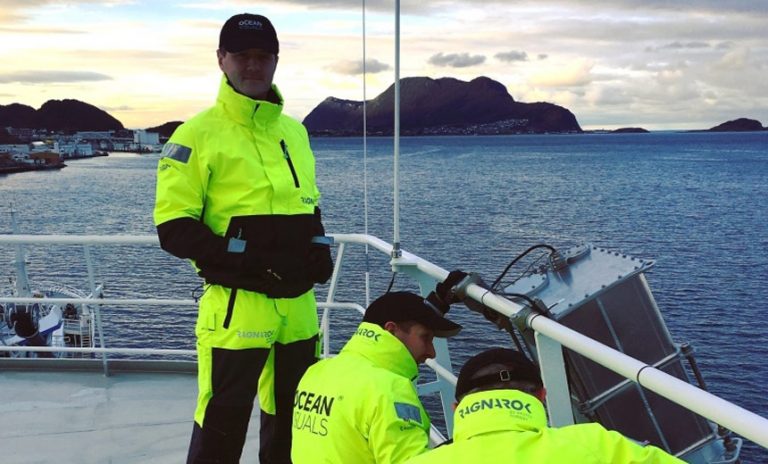
The life of an offshore technician
In our
industry, offshore workers are the most affected during the pandemic. While technicians,
who are currently not offshore have been provided with online technical and
safety courses and already have mechanisms for reporting without being in the
office, it is not possible for offshore workers to work from home.
The
consequences of the new procedures for offshore workers put them in a less
favorable condition, since the extension of their working hours, at sea and in
quarantine, forces them to be away from their families for much longer time than
previously.
As for the
Covid-19 situation, many difficulties and uncertainties are still in play, however,
we have found that the entire industry chain is concerned and committed to
preventing the spread of the virus amongst employees and on offshore units. We
will have to work together to ensure the health of offshore workers and only
then we will manage to keep the offshore market strong, while fighting against
the coronavirus.